

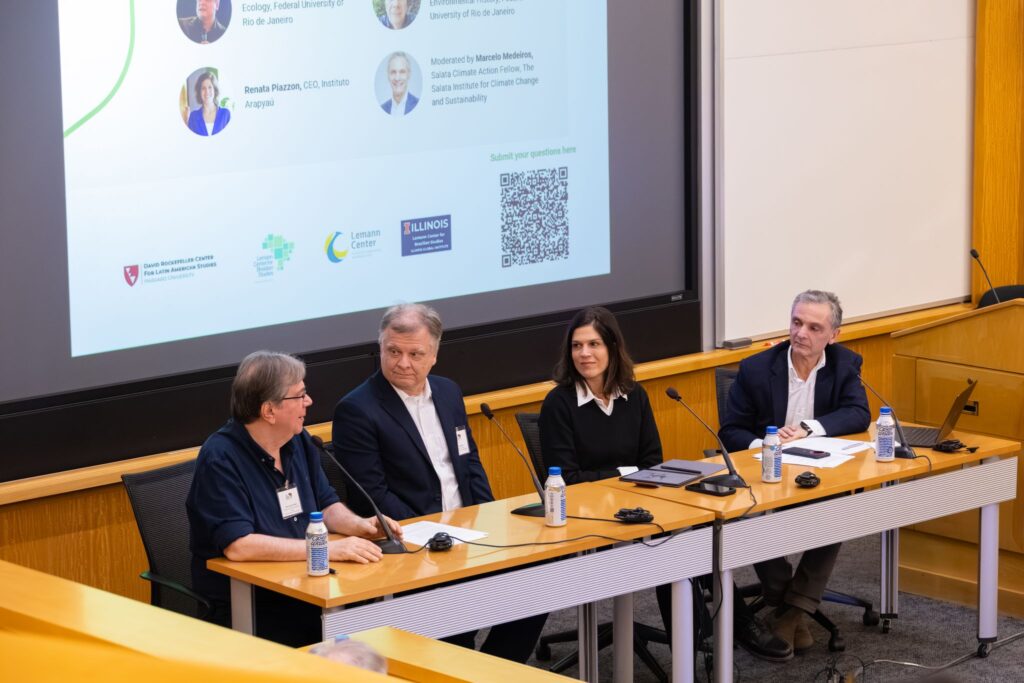
Instituto Arapyaú was present at the tenth edition of the Lemann Dialogues, one of the most relevant academic forums for debating the future of Brazil. The event, which took place on April 2 at Harvard University in the United States, featured Renata Piazzon, CEO of the institute. She participated in the debate on the Atlantic Forest during the official program, which followed the theme “Six Biomes, Multiple Realities, One Country.”
The meeting brought together researchers, members of the public sector, and the third sector to discuss the challenges and potential of the six Brazilian biomes: Amazon, Atlantic Forest, Cerrado, Caatinga, Pantanal, and Pampa.
The Atlantic Forest is one of the most threatened biomes on the planet. It is not a continuous forest, but a mosaic of natural areas, urban zones, and coastal regions. It spans 17 states and is home to approximately 70% of the country’s population. About 24% of its original cover remains. At the same time, it is the largest area under recovery in the country: 131,200 hectares, or 64% of everything being restored in Brazil, according to the Restoration Observatory.
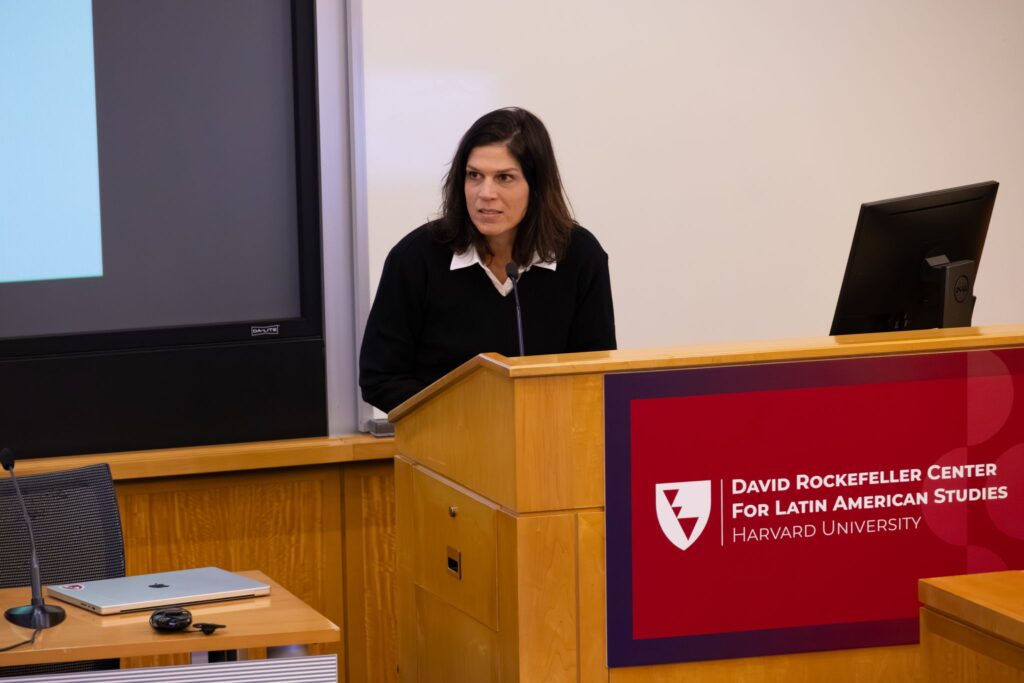
The CEO of Arapyaú reminded the audience that civil society possesses a robust network of coordination, such as the Forest Code Observatory, the Restoration and Reforestation Observatory, and the Pact for the Restoration of the Atlantic Forest, in addition to MapBiomas and the Brazil Climate, Forests and Agriculture Coalition (the latter two having been incubated by Arapyaú during their formation). For her, the Brazilian socio-environmental agenda depends less on new laws and more on the creation of a financing architecture capable of driving the forest agenda. “We already have legislation; what we lack is implementation at scale,” she said.
According to Renata, the challenge lies in building convergence within a polarized political environment. “The Coalition, for example, brings together agribusiness leaders and environmentalists in search of common ground on themes that everyone supports. As long as we cannot translate this agenda into economic data and be as competitive as the ‘mainstream,’ we will not be able to turn this game around.”
She presented as an example Arapyaú’s work in southern Bahia, fostering sustainable cocoa farming in the Atlantic Forest. Through a blended finance mechanism, the institute helped set up a model that offers financing and technical assistance to approximately one thousand small-scale producers in agroforestry systems. The initiative led to a 60% increase in the income of these farmers, with nearly zero default rates and the conservation of the forest.